


Page 6 - reflections_newsletter
P. 6
REFLECTIONS
                                                                                                                   Dyslipidaemia
     Dyslipidaemia Global Newsletter #11 2026


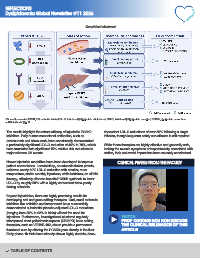
                                                     Graphical abstract                                            Dyslipidaemia


     CV, cardiovascular; CVOT, CV outcome trials; LDL-C, low-density lipoprotein cholesterol; LDLR, low-density lipoprotein receptor; PCSK9, proprotein convertase
     subtilisin/kexin type 9.


     The results highlight the robust efficacy of injectable PCSK9   dependent LDL-C reductions of over 50% following a single
     inhibitors. Fully human monoclonal antibodies, such as     infusion, though long-term safety surveillance is still required.
     evolocumab and alirocumab, have consistently demonstrated
     a particularly significant LDL-C reduction of 40% to 70%, which   While these therapies are highly effective and generally safe,
     have translated into significant 15% relative risk reductions in   lacking the muscle symptoms or hepatotoxicity associated with
     major adverse CV events.                                   statins, their real-world impact has been severely constrained

     Newer injectable modalities have been developed to improve         CLINICAL PEARLS FROM THE FACULTY
     patient convenience. Lerodalcibep, an adnectin fusion protein,
     achieves nearly 60% LDL-C reduction with smaller, room
     temperature, stable monthly injections, while inclisiran, an siRNA
     therapy, effectively silences hepatic PCSK9 synthesis to lower
     LDL-C by roughly 50% with a highly convenient twice-yearly
     dosing schedule.

     Beyond injectables, there are highly promising results for
     developing oral and gene editing therapies. Oral, small molecule
     inhibitors like enlicitide and laroprovstat have successfully
     demonstrated substantial placebo-adjusted LDL-C reductions
     (ranging from 35% to 62% in trials) without the need for
     injections. Furthermore, investigational clustered regularly          WATCH
     interspaced short palindromic repeats (CRISPR) base editing           PROF. CHOONG HOU KOH DISCUSS
     therapies, such as VERVE-102, aim to provide a permanent              THE CLINICAL RELEVANCE OF THIS
     functional cure by altering the PCSK9 gene directly in the liver.     ARTICLE.
     Early phase 1b trials have already shown highly durable, dose-


          TABLE OF CONTENTS

