


Page 4 - reflections_newsletter
P. 4
REFLECTIONS
                                                                                                                   Dyslipidaemia
     Dyslipidaemia Global Newsletter #11 2026


     factors (SMuRFs). However, these claims often rely on prior clinical diagnoses rather than comprehensive, longitudinal screenings,
     potentially leading to missed subthreshold exposures.                                                         Dyslipidaemia

     To address this gap, this study investigated the antecedent occurrence of non-optimal levels of the four major traditional risk factors
     (blood pressure [BP], cholesterol, glucose, and tobacco smoking) before a patient’s first CHD, heart failure (HF), or stroke event.
     The researchers aimed to determine if CVD truly occurs without preceding risk factors or if subthreshold, non-optimal exposures are
     simply being overlooked.
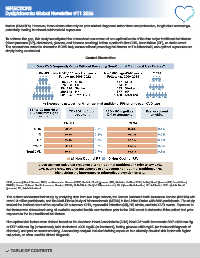
                                                     Central illustration


     CHD, coronary heart disease; CVD, cardiovascular disease; DBP, diastolic blood pressure; DM, diabetes mellitus; FBG, fasting blood glucose; HF, heart failure;
     KNHIS, Korean National Health Insurance Service; MESA, Multi-Ethnic Study of Atherosclerosis; MI, myocardial infarction; RF, risk factor; SBP, systolic blood
     pressure; TC, total cholesterol.


     The authors conducted their study by analyzing data from two large cohorts, the Korean National Health Insurance Service (KNHIS) with
     over 9.3 million participants, and the Multi-Ethnic Study of Atherosclerosis (MESA) in the United States with 6803 participants. The study
     tracked the incident event of five specific CV outcomes: CHD, myocardial infarction (MI), HF, stroke, and total CVD events. Exposure to
     risk factors was determined using all available repeated health examinations prior to the CVD event to determine if the patient had prior
     exposure to the four traditional risk factors.

     Non-optimal risk factors were defined based on the American Heart Association’s (AHA) ideal CV health framework: SBP ≥120 mm Hg
     or DBP ≥80 mm Hg (or treatment), total cholesterol ≥200 mg/dL (or treatment), fasting glucose ≥100 mg/dL (or treatment/diagnosis of
     diabetes), and past or current smoking. A secondary analysis included defining exposure to a clinically elevated risk factor with higher
     cut-points, as often used for clinical diagnosis.


          TABLE OF CONTENTS

