


Page 13 - reflections_newsletter
P. 13
REFLECTIONS
                                                                                                                   Dyslipidaemia
     Dyslipidaemia Global Newsletter #11 2026


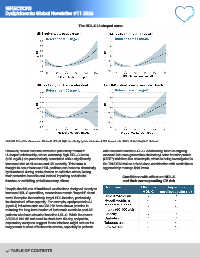
                                                 The HDL-C U-shaped curve                                          Dyslipidaemia


     EmCAD, Emory Cardiovascular Biobank; HDL-C, high-density lipoprotein cholesterol; HR, hazard ratio; UKB, United Kingdom Biobank.


     However, recent evidence reveals a potentially “harmful”   with elevated baseline LDL-C. Additionally, there is ongoing
     U-shaped relationship, where extremely high HDL-C levels   research into next-generation cholesteryl ester transfer protein
     (>80 mg/dL) are paradoxically associated with a significantly   (CETP) inhibitors like obicetrapib, which is being investigated in
     increased risk of all-cause and CV mortality. This harm is   the TANDEM trial as a fixed-dose combination with ezetimibe to
     thought to occur because HDL particles can become chronically   aggressively manage lipid levels.
     dysfunctional during acute phases or oxidative stress, losing
     their protective benefits and instead impairing endothelial            Conditions with effect on HDL-C
     function or exhibiting proinflammatory effects.                        and their corresponding CV risk


     Despite the failures of traditional medications designed merely to
     increase HDL-C quantities, researchers remain “hopeful” about
     novel therapies that actively target HDL function, particularly
     its cholesterol efflux capacity. For example, apolipoprotein A-I
     (apoA-I) infusions such as CSL112 have shown promise in
     reducing the long-term burden of ischaemic events in post-MI
     patients who have elevated baseline LDL-C. While the recent
     AEGIS-II trial did not meet its short-term 90-day endpoints,
     exploratory analyses suggest these infusions might reduce the
     longer-term burden of ischaemic events, especially in patients


          TABLE OF CONTENTS

